
 ChatGPT
 Claude
 Gemini
 Perplexity AI
Your conversion rate has not moved in two years, your Shopify theme has eleven apps bolted onto it, and the site takes six seconds to load on mobile. Somebody suggests a redesign. Six months and $40,000 later the site looks considerably better and converts at almost exactly the same rate.
That outcome is common enough to be the default. Ecommerce web design fails differently from other web design: the problem is rarely the visual design, and almost always some combination of page speed, checkout friction, product data structure and a platform that stopped fitting two years ago. Agencies who lead with aesthetics tend to deliver exactly that and nothing else.
Platform Decides Your Shortlist
Ecommerce agencies are platform businesses. An agency's Shopify expertise does not transfer to Magento, and pretending otherwise is how projects go wrong. Sort by platform before you sort by anything else.
| Platform | Fits | Typical build cost | Watch for |
|---|---|---|---|
| Shopify / Shopify Plus | Most DTC and mid-market retail | $10,000 to $75,000 | App bloat killing page speed |
| BigCommerce | B2B and complex catalogues | $20,000 to $100,000 | Smaller agency ecosystem |
| Adobe Commerce (Magento) | Large catalogues, complex rules | $75,000 to $400,000 | Total cost of ownership |
| WooCommerce | Content-led stores, lower volume | $8,000 to $40,000 | Scaling past moderate traffic |
| Headless / composable | High volume, custom experiences | $150,000+ | Needs in-house engineering |
If you are already on a platform and it is working, changing it is usually the most expensive way to solve a design problem. Replatforming is justified by capability gaps, not by frustration with how the store looks.
Revenue Stage Decides the Rest
The second filter matters as much as the first, and agencies rarely state it openly.
Under $1M a year. A well-configured premium theme, properly customised, beats a bespoke build. Spend the difference on product photography and paid acquisition. Agencies quoting $60,000 at this stage are selling you capability you cannot yet use.
$1M to $10M. Custom design on a standard platform. This is where conversion work pays for itself fastest, because you have enough traffic for the numbers to be real.
$10M to $50M. Custom build, serious performance engineering, and usually ERP or PIM integration. The website stops being a standalone project and becomes part of an operations stack.
Over $50M. Enterprise or headless, with a partner who can handle multi-region, multi-currency and a merchandising team that works in the CMS daily.
How We Ranked These Companies
Every company below currently ranks on page one for ecommerce website design searches in the US. We separated them on platform, revenue stage served, scope, and what they are genuinely best at.
One honest limitation is named for each. It is a fit boundary rather than a criticism.
Quick Comparison
| Company | Platform lean | Revenue stage |
|---|---|---|
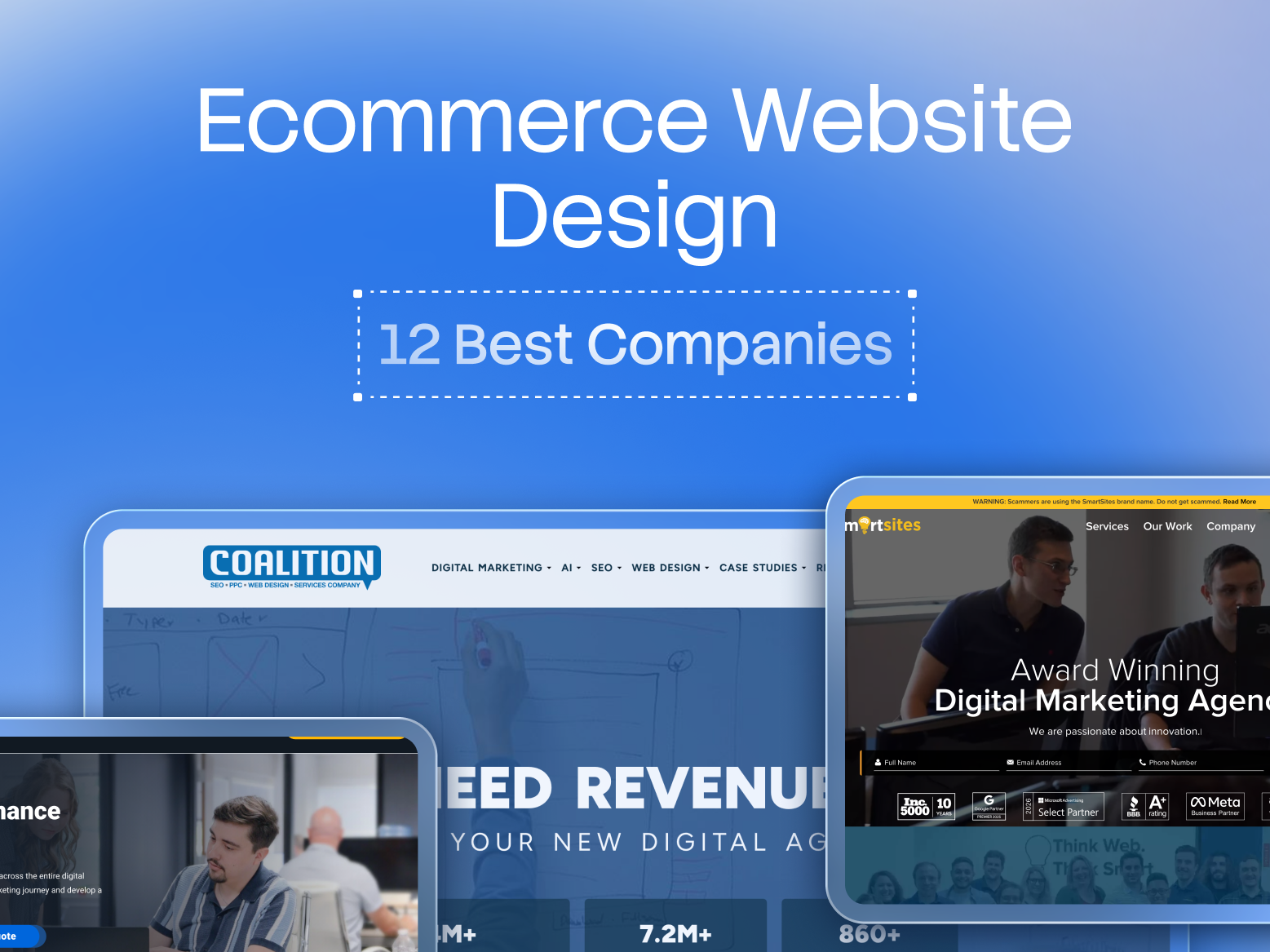
| Coalition Technologies | Shopify, multi-platform | $1M to $20M |
| OuterBox | Multi-platform, B2B | $5M to $50M |
| Absolute Web | Shopify Plus, Magento | $5M to $50M |
| SmartSites | Shopify, WooCommerce | Under $5M |
| Orbit Media | Multi-platform | $1M to $20M |
| Gravitate | Multi-platform | $1M to $10M |
| ScienceSoft | Enterprise, custom | $20M+ |
| Wise Digital Partners | Shopify, WooCommerce | Under $5M |
| eSEOspace | Shopify, WooCommerce | Under $2M |
| Paradigm Marketing and Design | Multi-platform, B2B | $1M to $10M |
| NetLynx | Custom, enterprise | $10M+ |
| OrangeMantra | Custom, multi-platform | $5M+ |
The 12 Best Ecommerce Website Design Companies in 2026
1. Coalition Technologies
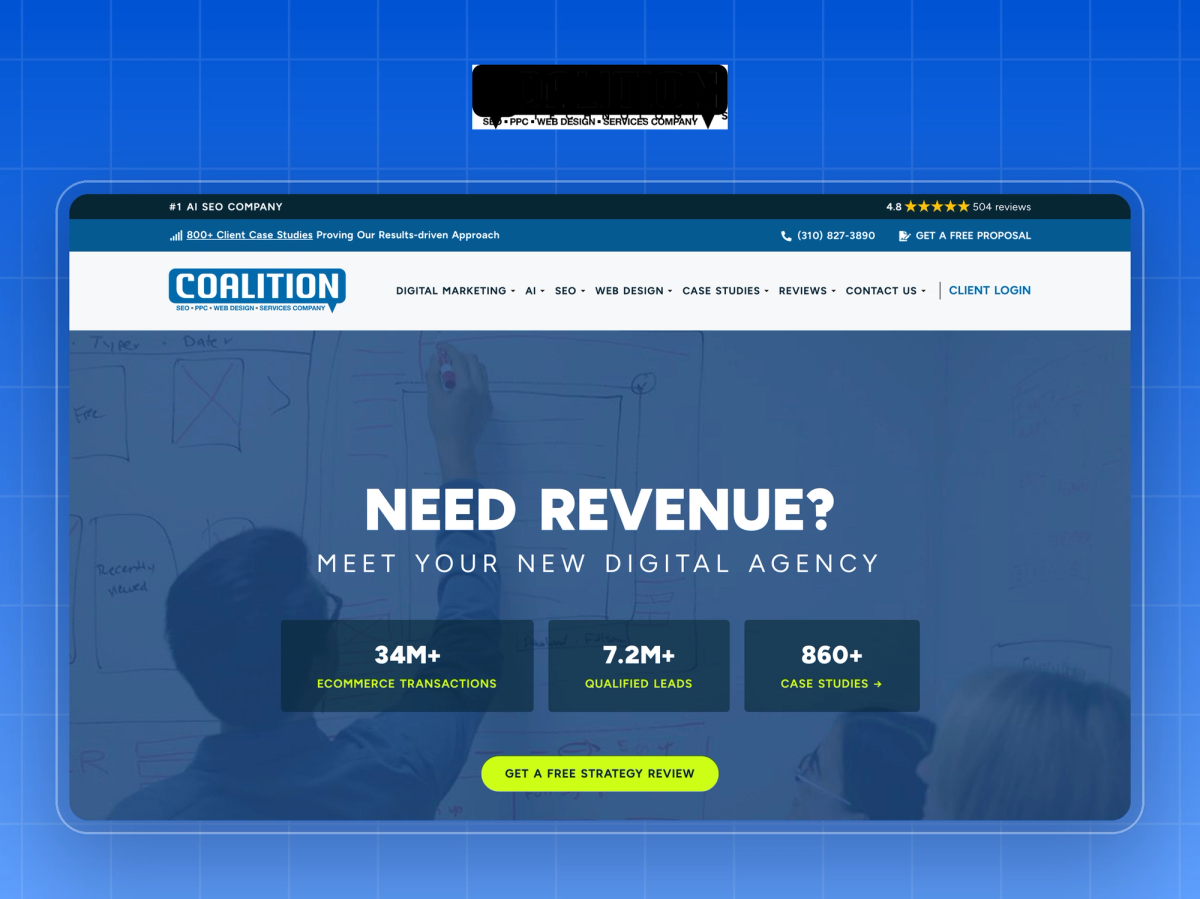
A long-established ecommerce agency combining design and development with substantial in-house SEO and paid media capability.
- Best for: Stores between $1M and $20M who want design, build and acquisition from one team
- Strength: Rare combination of genuine ecommerce build capability and performance marketing depth, which keeps the redesign accountable to revenue rather than to aesthetics
- Limitation: Breadth of services means the engagement is typically retained rather than a one-off build
2. OuterBox
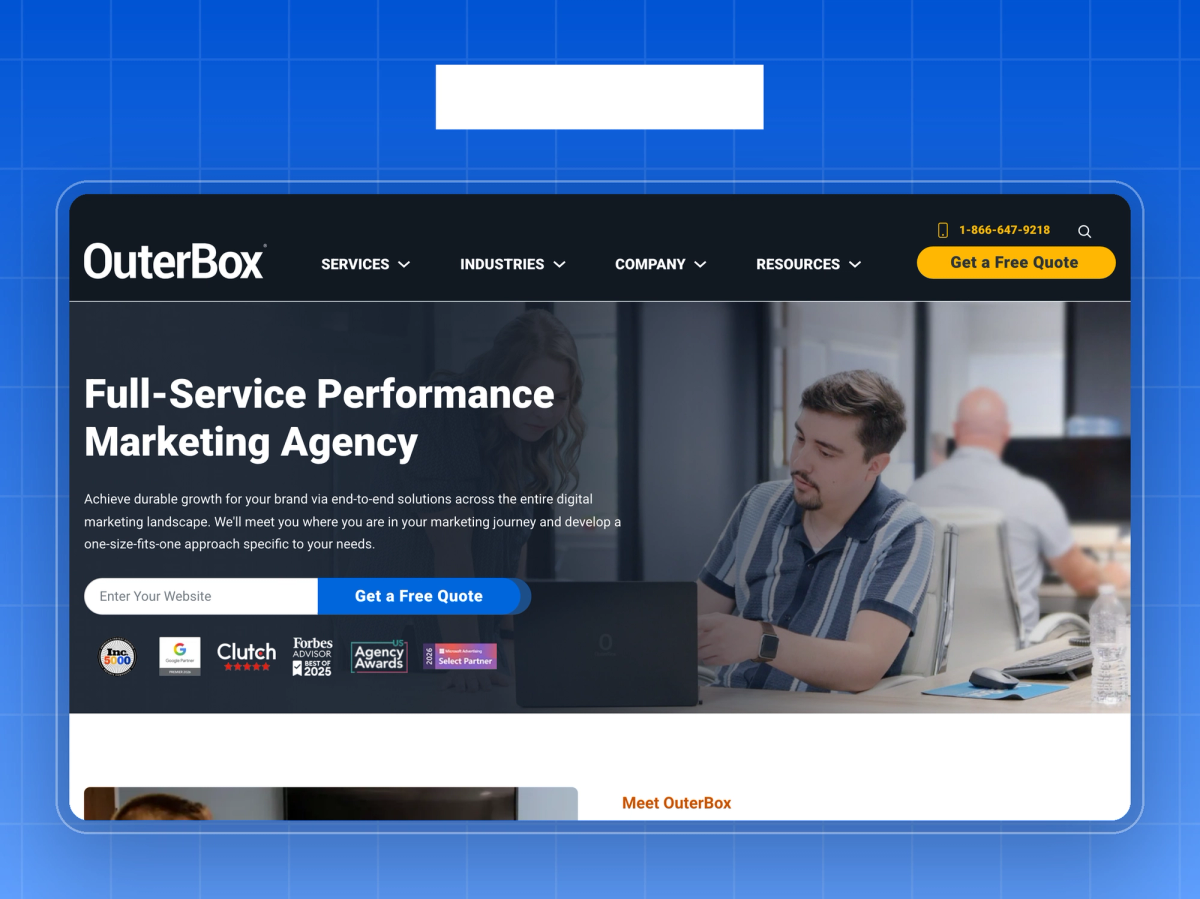
An ecommerce agency positioned explicitly around revenue outcomes, with notable strength in B2B ecommerce and complex catalogues.
- Best for: B2B ecommerce operations with customer-specific pricing, quoting or large SKU counts
- Strength: B2B ecommerce is a genuinely different discipline and OuterBox works in it deliberately rather than by accident
- Limitation: B2B and revenue orientation means less emphasis on brand-led DTC storytelling
3. Absolute Web
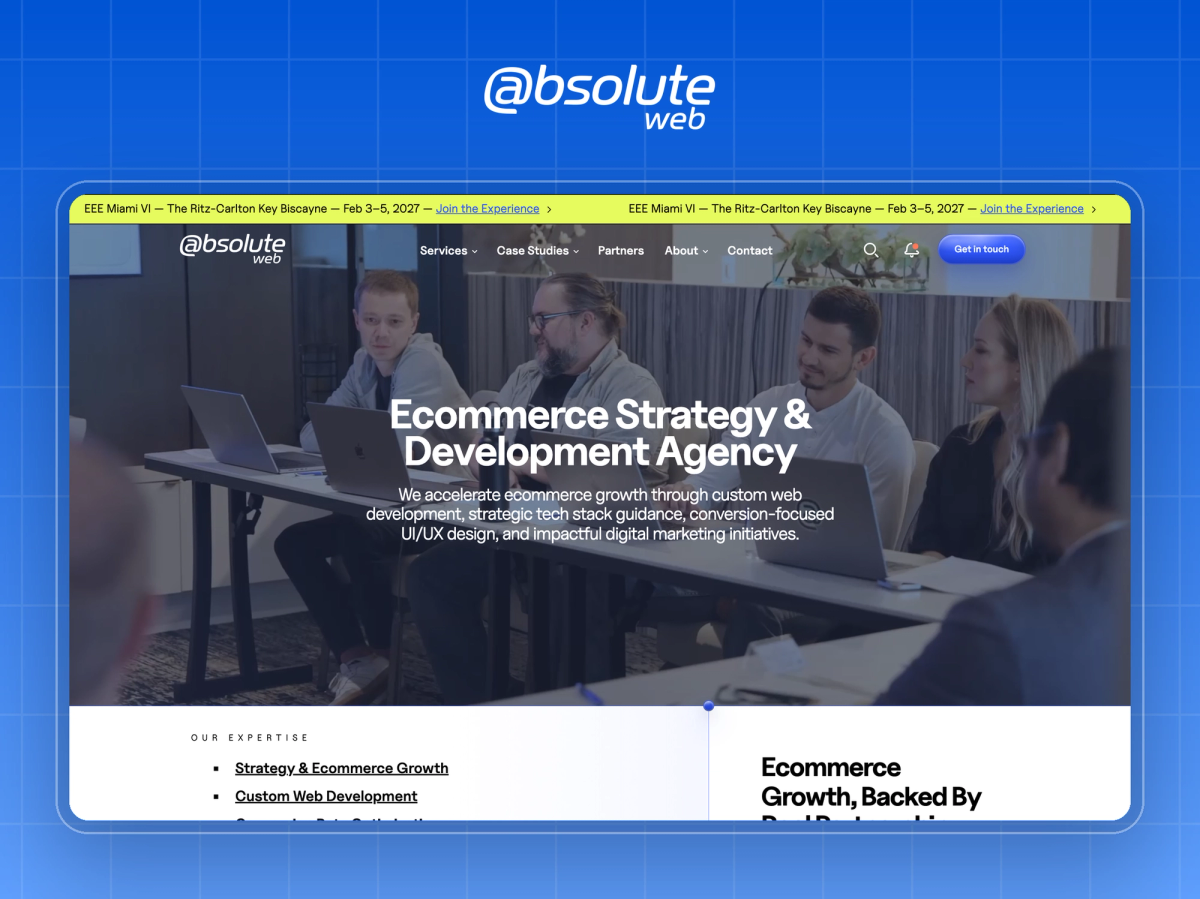
A Miami ecommerce agency working across Shopify Plus and Adobe Commerce, with a strong replatforming practice.
- Best for: Mid-market brands moving between platforms or outgrowing their current one
- Strength: Migration and replatforming experience, which is the highest-risk work in ecommerce and the place inexperience costs most
- Limitation: Mid-market and enterprise orientation, heavier than a store under $1M needs
4. SmartSites

A digital agency covering ecommerce design and development alongside PPC and SEO, aimed at small and mid-sized businesses.
- Best for: Smaller stores who want a straightforward build plus acquisition support
- Strength: Accessible entry point with acquisition capability attached, which suits businesses without an in-house marketing function
- Limitation: Generalist digital agency rather than an ecommerce specialist, so complex catalogue and integration work is less central
5. Orbit Media
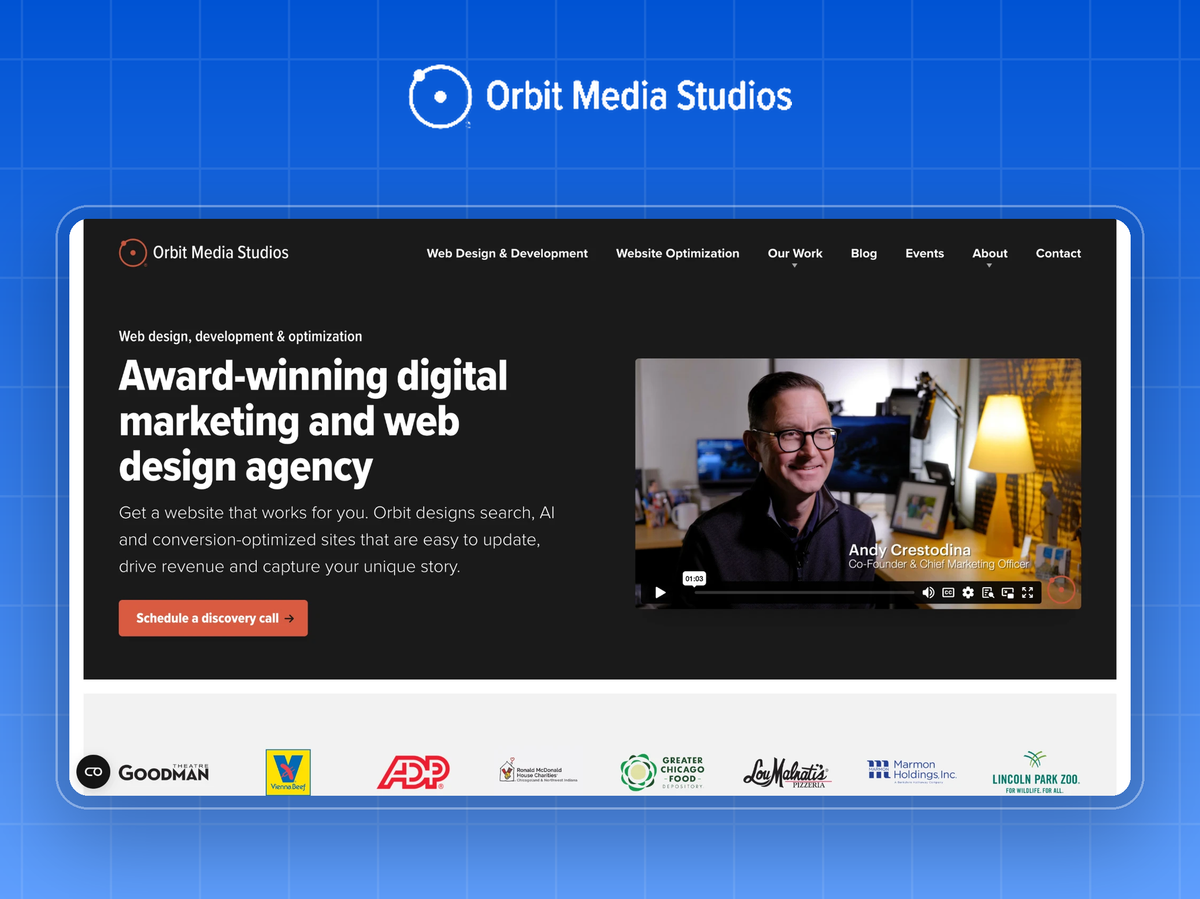
A Chicago agency with a substantial ecommerce practice, known for content architecture and analytics rigour.
- Best for: Content-led stores where editorial and commerce have to work together
- Strength: Content structure and measurement discipline, valuable when organic traffic is a meaningful revenue channel you cannot afford to disrupt
- Limitation: Generalist agency with an ecommerce practice rather than a platform specialist
6. Gravitate
An agency offering ecommerce web design with a focus on sales performance, serving small and mid-market retailers.
- Best for: Mid-market stores wanting design tied to conversion metrics
- Strength: Performance framing, which makes the project accountable to a number rather than to internal approval
- Limitation: Less suited to enterprise-scale catalogues and complex integration requirements
7. ScienceSoft
A software engineering company offering ecommerce design and development, with strength in custom and enterprise builds.
- Best for: Large operations needing custom commerce with deep ERP, PIM or warehouse integration
- Strength: Genuine engineering depth, so integrations with back-office systems are in scope rather than subcontracted
- Limitation: Engineering-led, so brand and creative direction usually sit with another partner
8. Wise Digital Partners
A digital agency offering ecommerce website design alongside broader marketing services for small and mid-sized businesses.
- Best for: Smaller stores wanting a single partner for site and marketing
- Strength: Full-service model at accessible scale, with continuity across web and acquisition
- Limitation: Smaller-business orientation means limited depth for high-volume or complex catalogues
9. eSEOspace
An ecommerce web design company serving small businesses, with SEO capability built into the offer.
- Best for: Early-stage stores under $2M who need a credible site and organic visibility
- Strength: Accessible pricing with search capability attached, suitable for founders without a marketing team
- Limitation: Scope and process suit smaller operations, not stores scaling past a few million in revenue
10. Paradigm Marketing and Design
A New Jersey agency covering ecommerce web design alongside branding and marketing, with notable B2B experience.
- Best for: B2B and manufacturing businesses adding an ecommerce channel to an existing operation
- Strength: Comfort with B2B buying dynamics, which differ sharply from consumer retail and break most DTC-trained agencies
- Limitation: Broad marketing positioning rather than deep platform specialism
11. NetLynx
A development company offering custom ecommerce design and build for larger operations.
- Best for: Businesses needing custom commerce functionality that standard platforms do not support
- Strength: Custom development capability for requirements outside the usual platform feature set
- Limitation: Custom builds carry higher long-term maintenance cost than a platform build, which has to be budgeted from the start
12. OrangeMantra

A development company providing ecommerce web development across multiple platforms and custom builds.
- Best for: Businesses wanting a development partner across several platforms and ongoing support
- Strength: Multi-platform capability and engineering resourcing at scale
- Limitation: Development-led, so design direction and conversion strategy need to come from you or another partner
What Ecommerce Web Design Costs in 2026
| Engagement | Typical range | What it covers |
|---|---|---|
| Premium theme setup | $3,000 to $10,000 | Theme, brand application, product upload, launch |
| Custom Shopify build | $15,000 to $75,000 | Custom design, custom sections, apps, integrations |
| BigCommerce or Woo build | $10,000 to $60,000 | Custom design and build on platform |
| Adobe Commerce build | $75,000 to $400,000 | Custom build, complex rules, integrations |
| Replatform migration | $50,000 to $250,000 | Data migration, URL mapping, integration rebuild, launch |
| Headless build | $150,000 to $500,000 | Custom front end, composable services, engineering |
The number that decides your actual return is not in the table. It is page speed. Ecommerce conversion is unusually sensitive to load time, and a redesign that adds a second to mobile load can cost more revenue than the design gains.
Ask every agency for a Lighthouse score on a store they built, tested on mobile, live on the call. If they cannot produce one above 60, the redesign is a lateral move.
What to Fix Before You Hire Anyone
Three things are worth doing before an agency is involved, because each one either shrinks the brief or proves you do not need one.
Run a mobile speed test on your three highest-traffic pages. Home, a top collection, a top product. If any scores under 50 on mobile, you have found a revenue problem that no redesign fixes by itself and that a developer can often address in days.
Watch twenty session recordings of visitors who did not buy. Not a sample of successful checkouts. Failures. Twenty is enough for the pattern to be obvious, and it is usually a specific moment rather than a general impression.
Audit your installed apps. List every one, what it does, and whether anyone uses it. Stores routinely carry five apps nobody has opened in a year, each loading scripts on every page view.
Do those three and you will arrive at the first agency call with a diagnosis rather than a feeling. That changes the proposals you get, because an agency responding to "checkout drops 40% at the shipping step" writes a very different scope than one responding to "we want a refresh."
The Five Questions That Separate Serious Agencies
- "What was revenue per visitor before and after on your last build?" The only outcome metric that matters. Screenshots prove nothing
- "Show me a store you built, on mobile, and run a speed test now." Live, during the call. Most agencies will deflect to a case study PDF
- "How do you handle migration and redirects?" Losing organic rankings in a replatform is the single most expensive ecommerce mistake, and it is entirely preventable
- "How many apps are on that store, and why?" Every app is a script. A store with twenty apps has a performance problem the redesign will inherit
- "Who owns merchandising after launch?" If your team cannot change a collection, a badge or a promo without a ticket, the site will fossilise
Replatform or Redesign
This is the decision most ecommerce teams get wrong, in the expensive direction.
Redesign when the platform does what you need and the problem is presentation, conversion or speed. This is most cases. It is cheaper, faster, and carries almost no risk to your organic rankings.
Replatform when there is a capability you genuinely cannot reach: multi-region tax handling, a catalogue structure the platform cannot express, B2B pricing logic, or headless requirements. Frustration with the admin interface is not a capability gap.
Replatforming is the highest-risk project in ecommerce because most of the budget is migration rather than design. Product data, customer accounts, order history, URL structure, reviews, subscriptions and integrations all have to move without loss.
Plan for migration to take longer than design, because it usually does. Budget roughly 60% of the project to the move and 40% to how it looks when it arrives.
Why Most Ecommerce Redesigns Do Not Move Revenue
The uncomfortable pattern: a store redesigns, the site looks materially better, and conversion moves less than one percentage point. It happens often enough that it should be the default expectation rather than a surprise.
Four causes account for most of it.
The diagnosis was cosmetic. Nobody looked at analytics before commissioning. If you cannot name the step in the funnel where visitors leave, you are redesigning on taste.
Speed got worse. New design, more images, more animation, more apps. A store that loads a second slower converts worse regardless of how it looks.
Checkout was out of scope. On Shopify, checkout customisation is limited outside Plus, so the highest-drop-off step often goes untouched while everything upstream gets rebuilt.
Product information did not change. Shoppers abandon because they cannot tell whether the thing fits, ships in time, or returns easily. That is a content problem, and a redesign that reflows the same thin copy changes nothing.
The fix in all four cases is the same and costs almost nothing: spend a week in analytics and session recordings first. Find the step that leaks. Brief against that step rather than against the whole site.
A store doing $3M a year with a 1.8% conversion rate does not need a new look. It needs to know why 98.2% of visitors leave, and that answer is already sitting in the data.
Ecommerce is not our discipline. Windmark builds websites for B2B and technical product companies, so if you are running a store, the twelve companies above are better placed than we are and we would rather say so than take the brief.
Where we do help is the adjacent problem: a commerce business whose brand or non-store website is carrying the weight, or a B2B company building a considered purchase flow rather than a cart.
If that is closer to your situation, book a call. If not, start at the top of this list.